· 5 min read · Triple Helix
Synthetic Senses: Will Technology Let Us Experience Colors, Smells, and Sounds We’ve Never Known?
Imagine walking through a garden and seeing hues that no human has ever named, smelling scents that exist outside our planet’s chemical reality, or hearing sounds far beyond the limits of our…
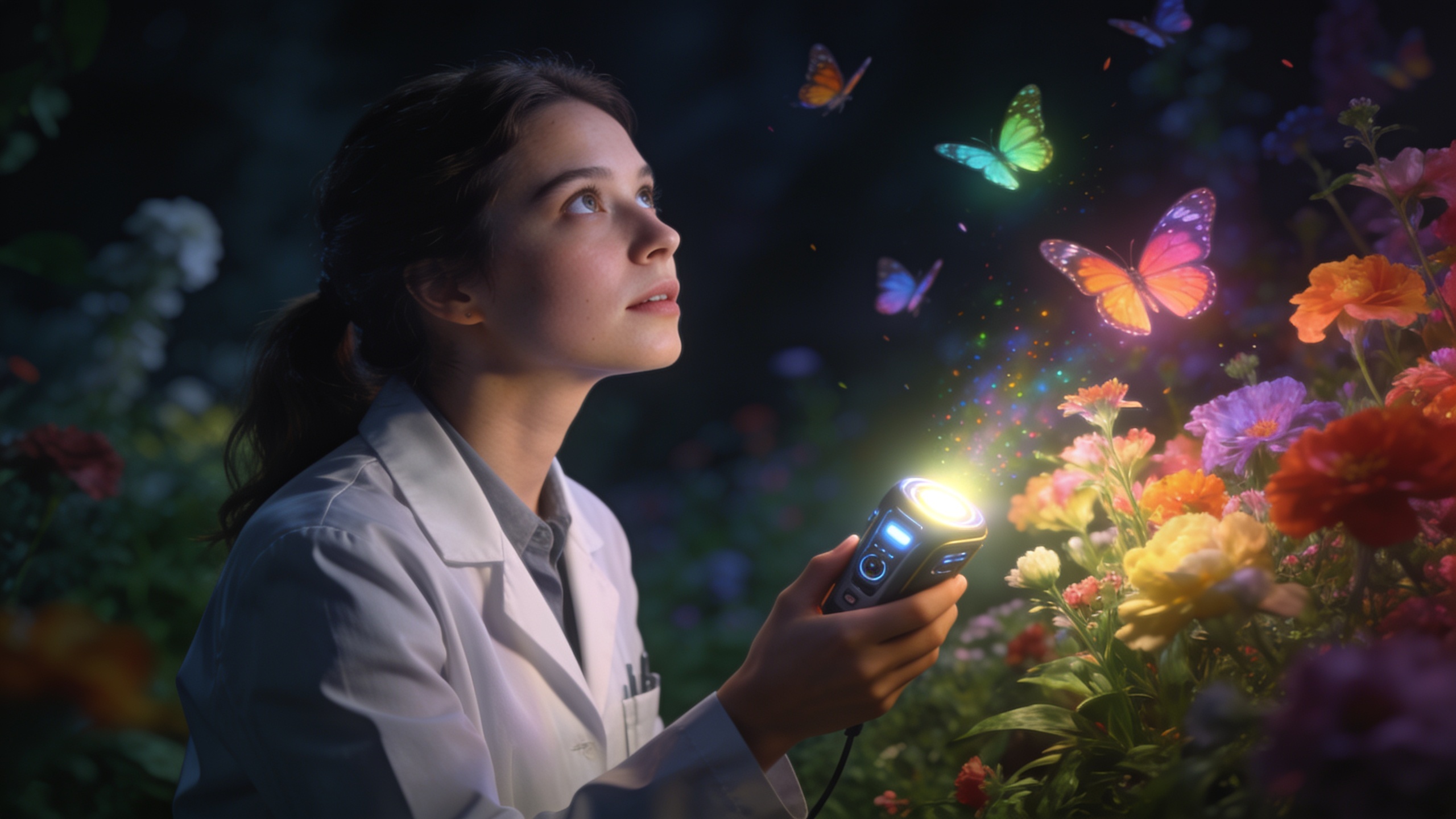
Imagine walking through a garden and seeing hues that no human has ever named, smelling scents that exist outside our planet’s chemical reality, or hearing sounds far beyond the limits of our auditory range. This isn’t a distant fantasy anymore — emerging technologies are already testing the boundaries of our senses. And in the coming decades, we might augment them to experience an entirely new spectrum of reality.
Humans have long been fascinated by what lies outside our natural perception. Bees can detect ultraviolet light, snakes can sense infrared heat signatures, and whales communicate with infrasonic calls that travel for hundreds of miles. For most of history, these abilities were beyond our reach. Now, the intersection of neuroscience, bioengineering, and computing is opening the door to “synthetic senses” — artificially created ways to perceive the world.
Seeing Colors That Don’t Exist (Yet)
The average human eye can detect about a million different colors, thanks to three types of cone cells sensitive to red, green, and blue wavelengths. Some animals, like the mantis shrimp, have up to 16 different photoreceptor types, potentially seeing colors we can’t even imagine.
Researchers are developing retinal implants and wearable devices that could add new photoreceptor capabilities to our vision. Imagine a device that lets you see ultraviolet like a butterfly, or infrared like a predator hunting in the dark. Artists could create works using “non-human” colors, leading to a new visual culture entirely dependent on enhanced perception.
Of course, the challenge is not just capturing new wavelengths but translating them into signals the brain can interpret. This requires neural re-mapping — essentially teaching the brain a new “visual language.”
Hearing the Unheard
Humans hear between 20 Hz and 20,000 Hz, a narrow window compared to the range of many other species. Elephants communicate using low-frequency infrasound; bats navigate with high-frequency echolocation.
Technology is already bridging these gaps. Devices like cochlear implants and bone-conduction headsets have proven that the brain can adapt to unconventional forms of auditory input. Next-generation “hearing augmentation” could give us the ability to listen to the hum of the Earth’s magnetic field, the deep vibrations of tectonic plates shifting, or the layered complexity of bird calls far above our frequency range.
Sound engineers and musicians might use this expanded perception to create music that is literally beyond the range of unenhanced humans — a form of art exclusive to those with augmented hearing.
Smelling and Tasting the Impossible
Scent and taste are chemical senses — our brains interpret molecules as smells or flavors. But what if we could design synthetic scent receptors to detect compounds that don’t occur on Earth? This could allow astronauts to “smell” the chemical profile of distant planets without ever leaving their ship.
Food science is another obvious frontier. Imagine a virtual reality cooking class where your headset doesn’t just show you the dish — it beams the aroma directly into your brain’s olfactory center. Or a “digital sommelier” that lets you taste a wine’s flavor notes without pouring a glass.
Smell and taste augmentations could also expand our safety capabilities — detecting dangerous gases, spoiled food, or even subtle biochemical markers of disease long before symptoms appear.
Touching the Untouchable
Haptics — technology that simulates touch — is already advancing rapidly in gaming and virtual reality. But future “synthetic touch” could go far beyond realistic vibration feedback. Neural-linked gloves or implants might allow us to feel magnetic fields, air pressure shifts, or the subtle textures of microscopic surfaces.
Surgeons could “feel” the difference between healthy and cancerous tissue at the cellular level. Architects could “touch” a virtual building’s texture before it’s ever constructed. And yes, gamers could experience entirely new forms of interaction — imagine feeling the heat of a dragon’s breath or the shimmer of stardust between your fingers.
The Brain: The Ultimate Interface
The most powerful part of synthetic senses isn’t in the sensors — it’s in the brain’s plasticity. Our brains are remarkably adaptable, capable of rewiring themselves to interpret entirely new types of input. This is why blind individuals can use sensory substitution devices (like turning camera images into sound patterns) to navigate spaces.
Brain-computer interfaces (BCIs) could eventually feed entirely novel sensory data into our neural networks. This wouldn’t just enhance existing senses — it could create entirely new ones, like detecting Wi-Fi signals, reading environmental data in real time, or perceiving emotional states through subtle biometric cues.
Ethics, Access, and the Augmented Divide
While the technology is thrilling, it raises ethical questions. Will synthetic senses be considered medical necessities for some and luxury upgrades for others? Could enhanced perception give unfair advantages in sports, art, or business? And what happens when a society is split between those who experience “base reality” and those who perceive a much richer, layered world?
There’s also the question of psychological impact. Experiencing sensory input outside the human norm could be overwhelming or even alienating. We might need entirely new forms of sensory literacy and etiquette to navigate an augmented world.
Why It Matters for Business and Innovation
Synthetic senses won’t just change personal experiences — they’ll transform industries. Medicine, design, manufacturing, education, and entertainment could all evolve around new forms of perception.
For businesses, the challenge will be developing custom tools and platforms that harness these abilities. That means designing software and systems that can interpret, visualize, and make sense of expanded sensory data in ways that feel intuitive for users.
From building interfaces for next-generation devices to designing visualization tools for data that lives beyond human senses… The future isn’t just something we’ll see, hear, smell, taste, or touch — it’s something we’ll design together.
Ready to Transform Your Business?
Let's discuss how our data solutions and technology expertise can help your organization achieve its goals.
Get In Touch