· 4 min read · Triple Helix
Tech Time Travel: What Your Business Could Look Like 10 Years From Now
Picture this: It’s 2035. You walk into your facility—well, you don’t really walk in. Your digital assistant has already analyzed your schedule, predicted a supplier delay before it happened, and…
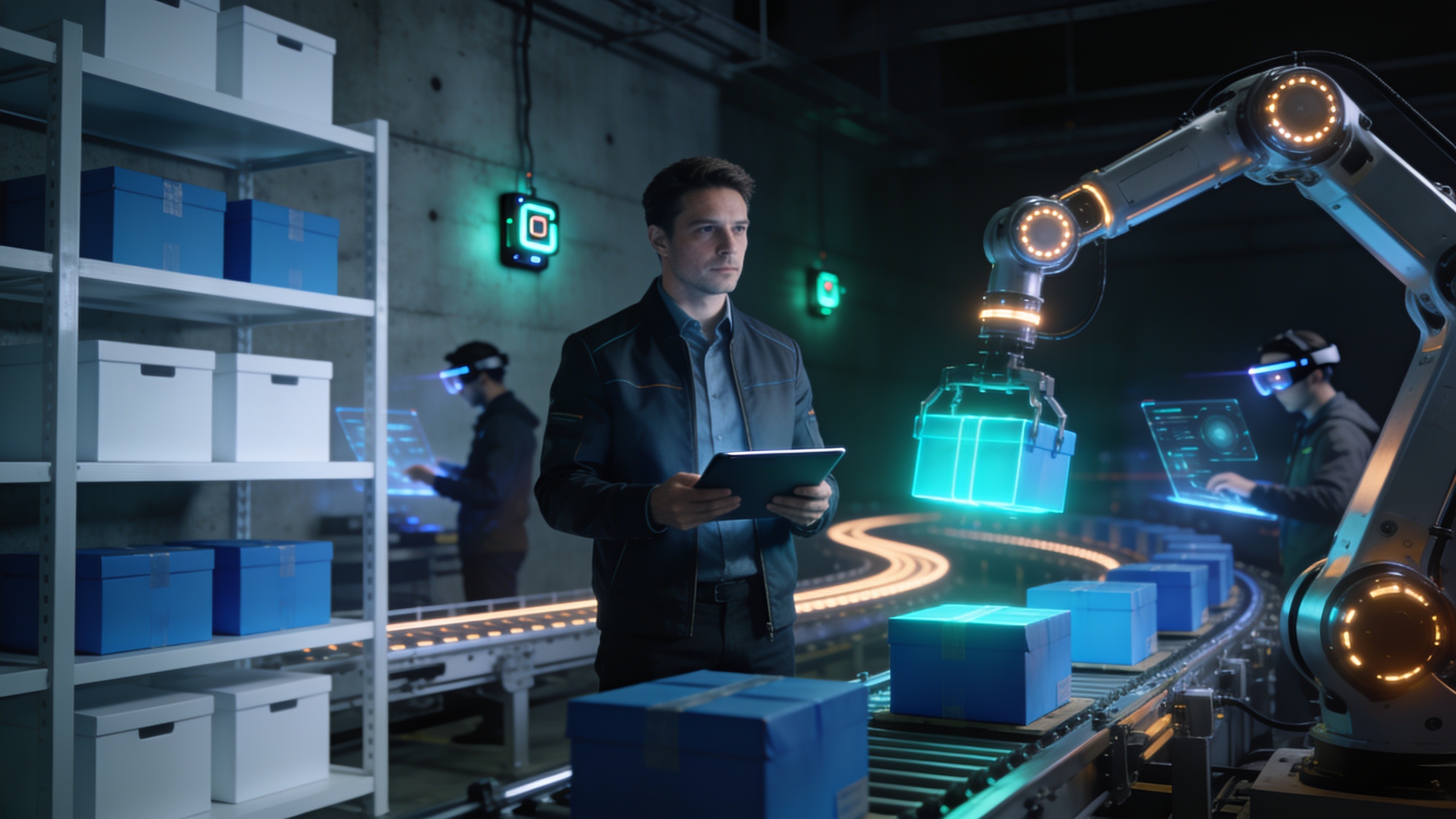
Picture this: It’s 2035. You walk into your facility—well, you don’t really walk in. Your digital assistant has already analyzed your schedule, predicted a supplier delay before it happened, and rerouted the logistics through an alternate vendor. Your shop floor machines are humming along, talking to each other in machine-speak, and your dashboard is streaming insights straight to your glasses.
No, this isn’t a scene from Black Mirror or a deleted Iron Man storyboard. It’s the not-so-distant future of small and mid-sized businesses—and it’s coming faster than most people realize.
Let’s fast forward.
A Day in the Life of Future-Ready Business
You start your morning reviewing predictive reports generated overnight by AI-powered analytics. These aren’t just charts—they’re actionable insights based on real-time data pulled from your machines, employees, customers, and supply chain.
A few taps (or voice commands) later, your warehouse shifts staffing and inventory assignments based on predicted order volume. Your ERP system is in sync with everything from procurement to payroll. Even customer service tickets are being triaged and answered with natural language AI assistants that know your business better than your human reps did five years ago.
Sound far-fetched? It’s not. These technologies exist. The question isn’t if they’ll be adopted—it’s when.
The Technologies That Will Define the Next Decade
AI & Machine Learning
We’re already seeing businesses use AI for everything from automated forecasting to anomaly detection. In the next decade, this will become the norm. AI will not just support decision-making—it will drive it.
Imagine AI models that don’t just tell you what happened, but what will happen—and what to do about it.
IoT (Internet of Things)
Sensors in equipment, vehicles, inventory bins, and even packaging will create a data-rich environment that drives real-time decisions. You’ll know when a part is about to fail before it does. You’ll optimize routes, production lines, even energy usage—all from the data your tools are already collecting.
Edge Computing
Cloud computing is powerful—but it comes with latency. Edge computing brings computation closer to where the data is generated. That means faster processing, better automation, and a more resilient tech stack for manufacturers and logistics-heavy businesses.
Digital Twins
A digital twin is a real-time, virtual model of a physical system. Want to simulate a new workflow before rolling it out? Test it in the twin. Want to see how a process reacts to stress before you implement a change? Run it in the twin. Digital twins will change how businesses plan, test, and execute.
Human-Machine Collaboration
We’re not talking full-blown android coworkers (yet), but we are entering an era where humans and machines will work more symbiotically. From AR-guided repairs to voice-controlled data input, future systems will blend human intuition with machine precision.
The Future Isn’t Just for Big Enterprises
You might be thinking: “Sure, this all sounds great, but it’s only realistic for Fortune 500 companies with innovation labs and limitless budgets.”
Wrong.
The beauty of modern technology is that it’s becoming more accessible than ever. Platforms are modular, cloud-based, and scalable. AI models are available off-the-shelf and trainable on your data. IoT sensors are dropping in price. What used to cost millions can now be implemented affordably—and strategically.
The Hidden Risk: Inflexible Systems
Here’s the catch: if your current systems can’t adapt, you’ll miss the future boat.
Legacy ERPs, siloed spreadsheets, and outdated databases can’t absorb new capabilities easily. You’ll either have to patch together workaround after workaround or rip everything out and start over.
Neither is ideal.
That’s why future-proofing starts now—with technology that’s flexible, scalable, and built with change in mind.
So What Should You Do Now?
You don’t need to implement AI tomorrow or outfit your warehouse with robotic forklifts. But you should be evaluating whether your tech stack supports:
- Real-time data
- Modular architecture
- Easy integration with new tools
- Automation-readiness
- Cloud-first capabilities
You should also be working with tech partners who think ahead, not just maintain what’s already there.
How Triple Helix Helps You Prepare
At Triple Helix, we build systems that grow into the future.
Our custom software isn’t about flash—it’s about laying the foundation for smarter decisions, faster workflows, and more agile growth. Whether that’s integrating predictive analytics, automating manual processes, or untangling messy legacy infrastructure, we’re here to help you evolve.
We specialize in manufacturing and operations-heavy businesses that don’t just want to keep up—they want to get ahead.
Curious what your future business could look like? Let’s map it out together. Reach out to Triple Helix at www.3xcorp.com and let’s start building the foundation for your next decade of growth.
Ready to Transform Your Business?
Let's discuss how our data solutions and technology expertise can help your organization achieve its goals.
Get In Touch